
Cybersecurity
High-assurance,
multi-layered
protection

High performance
Up to 15Gbps
SPI throughput

SD-WAN
SD-WAN & traffic
control capabilities

User-definable ports
User-definable multi-gig WAN/LAN ports up to 10Gbps

Cloud management
Centralized cloud
provisioning and
management
A new era in
cybersecurity.
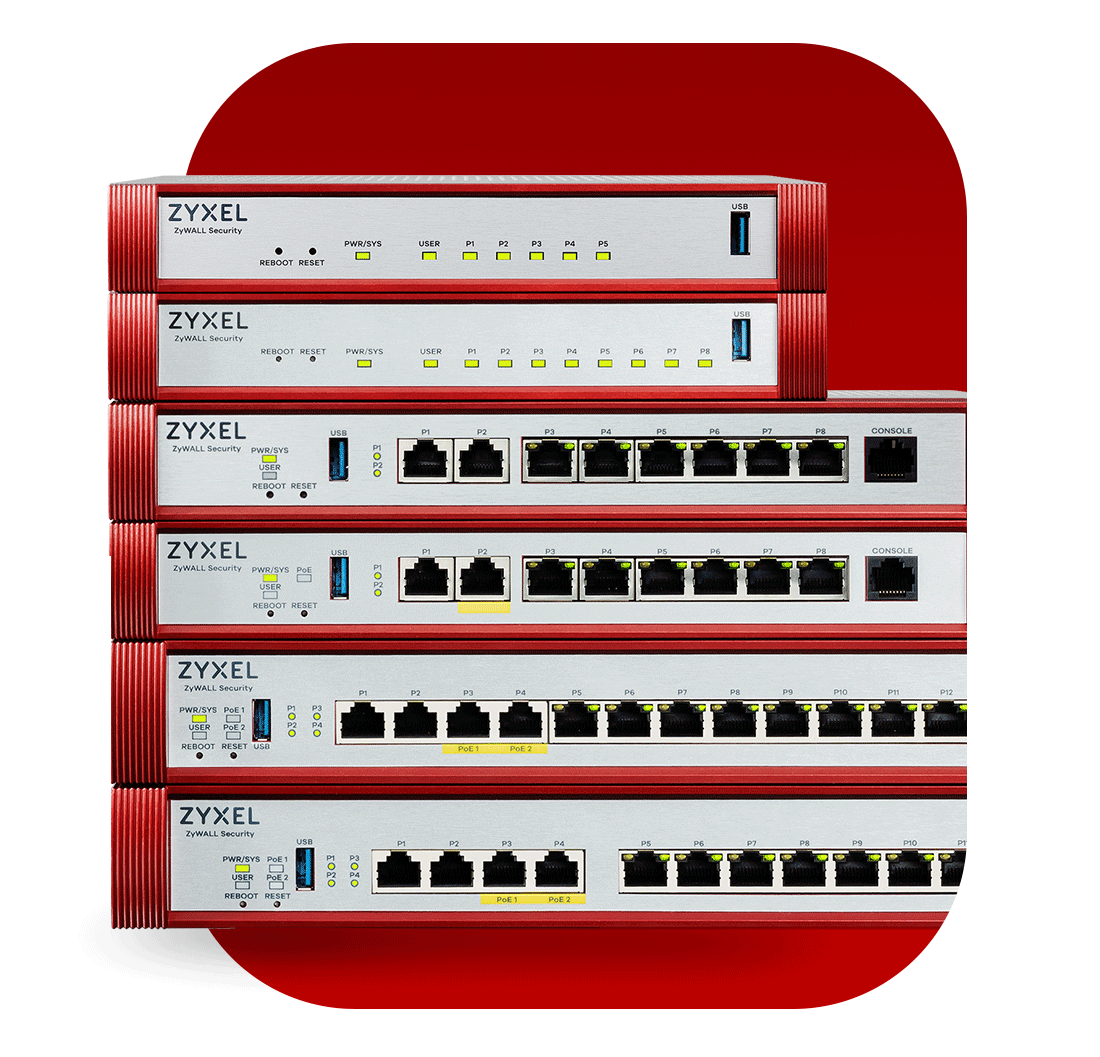
The multi-award-winning Zyxel USG FLEX H series combines ultra-fast hardware performance with advanced configuration and deployment capabilities. Designed for modern, distributed networks, it supports Auto VPN configuration powered by Nebula, enabling fast, consistent site-to-site connectivity without complex manual setup.
With centralized management through Nebula and security visibility from Zyxel SecuReporter, organizations can easily scale across multiple locations. Administrators can apply unified policies, monitor security risks and gain actionable insights from a single, cloud-based interface – reducing complexity and speeding up response times.
Alongside these deployment and management advantages, the USG FLEX H series delivers extensive cybersecurity services designed to protect against evolving threats, including zero-day attacks, while maintaining the high performance required by today’s applications and high-speed networks.
Understand network
security like never before.
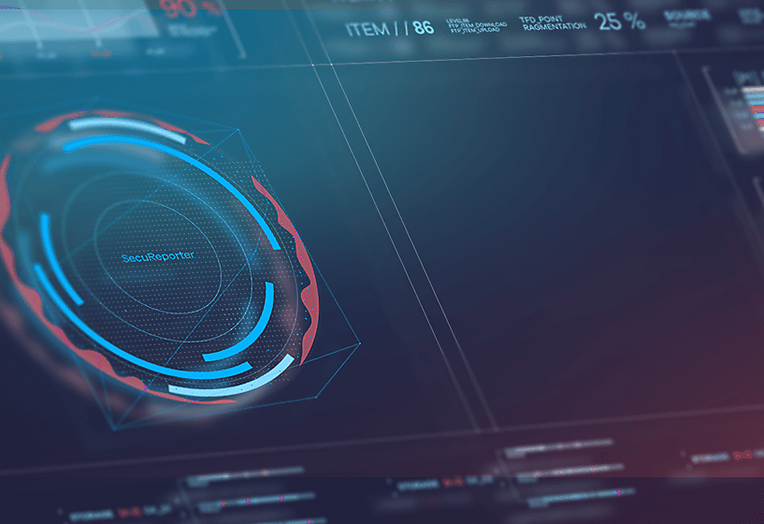
Zyxel SecuReporter offers a multi-dimensional analytics approach to detecting abnormal behaviors across all your business locations. With a centralized dashboard, you can easily view and analyze different dimensions of network security and gain fast in depth insights into exactly what’s happening across your network(s).

AI-powered
cloud cybersecurity.
The Zyxel USG FLEX H series firewall is built on a multi-layered, AI-powered cloud security architecture. It protects business networks from external attacks, internal misuse and zero-day threats.
At the core is Zyxel’s Security Cloud infrastructure, which combines global threat intelligence with technologies from leading security partners. The security cloud is continuously updated, so protection evolves automatically without manual intervention.
Key security features include:
- AI-powered threat detection and response
- Cloud sandboxing for unknown files
- Anti-malware & ransomware protection
- Intrusion Prevention System (IPS)
- DNS, IP and URL filtering
- Application patrol and control
Network control features:
- Web content filtering
- Traffic shaping for critical applications
- Geo-IP filtering for location-based policies
This approach provides always-on, cloud-updated protection for modern business networks.
Our security partners.
The Zyxel Security Cloud and USG FLEX H series combine global cybersecurity intelligence with technologies from our trusted security partners.





Ultra-high performance
without compromising security.
The Zyxel USG FLEX H series firewall uses next-generation (NGFW) multi-core hardware and Fastpath acceleration to deliver ultra-high efficiency and throughput. This architecture optimizes processor utilization, allowing high-speed traffic to be fully inspected without performance loss.
Compared with previous generations, the USG FLEX H series delivers up to 3x higher performance, enabling stronger top-level throughput while running full security services.
The increased processing power allows features such as intrusion prevention, anti-malware, application control and web filtering to run much faster, delivering real-world performance users can experience – while maintaining the highest level of security.

Port flexibility, multi-gig
and PoE+.
With 2.5mGig (multi-gig) and 10Gbps port speed options, the Zyxel USG FLEX H also features software-defined ports, giving you true flexibility to configure and tailor each device as required – whether for WAN or LAN.
The USG FLEX H includes up to 2x 30W PoE+ integrated ports*, helping simplify installations and reduce install costs by powering devices like 5G routers, the latest WiFi access points or VoIP phones directly from the device.
Powerful, effortless and
scalable connectivity.
With Nebula, you can manage your entire network – wireless, switching, security and FWA – through a single centralized cloud platform. Deploy and configure devices quickly and remotely, without the need for extra hardware controllers or software.
Whether you're managing one site or many, Nebula delivers real-time monitoring, instant alerts and complete network visibility – anytime, anywhere.
Scale confidently, simplify operations and stay secure – all through one intuitive platform.

Cloud and on-prem in sync.
The Zyxel USG FLEX H Series features our industry-first Smart Sync capability to seamlessly bridge cloud and on-premises environments.
Smart Sync automatically synchronizes security policies, network objects and HA settings between Nebula and the local interface. Smart Sync eliminates manual updates, maintains consistency and simplifies network management as your business scales.
High availability (HA)
as standard.
The Zyxel USG FLEX H series includes High Availability (HA) as a standard feature on the 200H model and above, with no additional licenses or hidden costs. By simply deploying two devices, organizations can create a resilient, failover-ready network that keeps services running even if one unit goes offline.
The HA design ensures automatic synchronization of configurations and seamless failover, minimizing downtime and maintaining security enforcement without interruption. This built-in capability provides enterprise-grade reliability straight out of the box, making it easy to protect critical operations without added complexity or expense.
Cybersecurity that speaks for itself
We think our cybersecurity solutions are exceptional – but the awards and reviews speak for themselves!

Communications Today Awards
USG FLEX H Series Cybersecurity Winner
PUR 2026
Security Solution Network Firewall Champion
PC Pro
Excellence Awards 2025 Security Hardware of the Year

IT Pro
A competitively priced UTM security appliance

Taiwan Excellence
Zyxel USG FLEX 50HP Taiwan Excellence Awards 2026

CRN
Tech Innovator Awards Network Security SMB - Winner

MB Reviews
Excellent upgrade over its predecessor

Poc Network
Pretty rock solid when it comes to small business

Security and performance
validated by the Tolly Group.
Independent testing from The Tolly Group confirms the strong performance and security effectiveness of the Zyxel USG FLEX H series. The reports compare it against other leading networking security gateways, highlighting excellent malware detection and overall protection, with results that outperform competing solutions.
Powered by the new uOS platform, AI-driven Security Cloud, and enhanced UTM and VPN throughput, the series is built for modern SMB/SME networks.
Download the full reports to see the detailed test results and benchmarks.
All specifications are subject to change without notice.
* The USG FLEX H series includes models with different PoE+ port configurations. Please note that PoE+ is supported only on the USG FLEX 50HP, 100HP, 200HP, 500H, and 700H models. For further information, please refer to the spec table.