
The world has barely had time to get used to 2.5Gbps over copper, and Zyxel is already creating devices where this is considered the minimum required speed for a wireless access point. Moreover, the company is betting on 10GBASE-T becoming the standard working protocol almost everywhere within the next five years, and the XS1935-12HP multigigabit managed switch was designed specifically with this development in mind.
Today, we will take a look at what the successor to the well-known XS1930-12HP has become and how fast a next-generation access switch can be. We should also not forget that it supports the IEEE 802.3bt standard, Type 4, which means it can deliver up to 90W per port. It seems that an era is coming when most devices will be able to receive power directly over a network cable. But let us take things one step at a time.
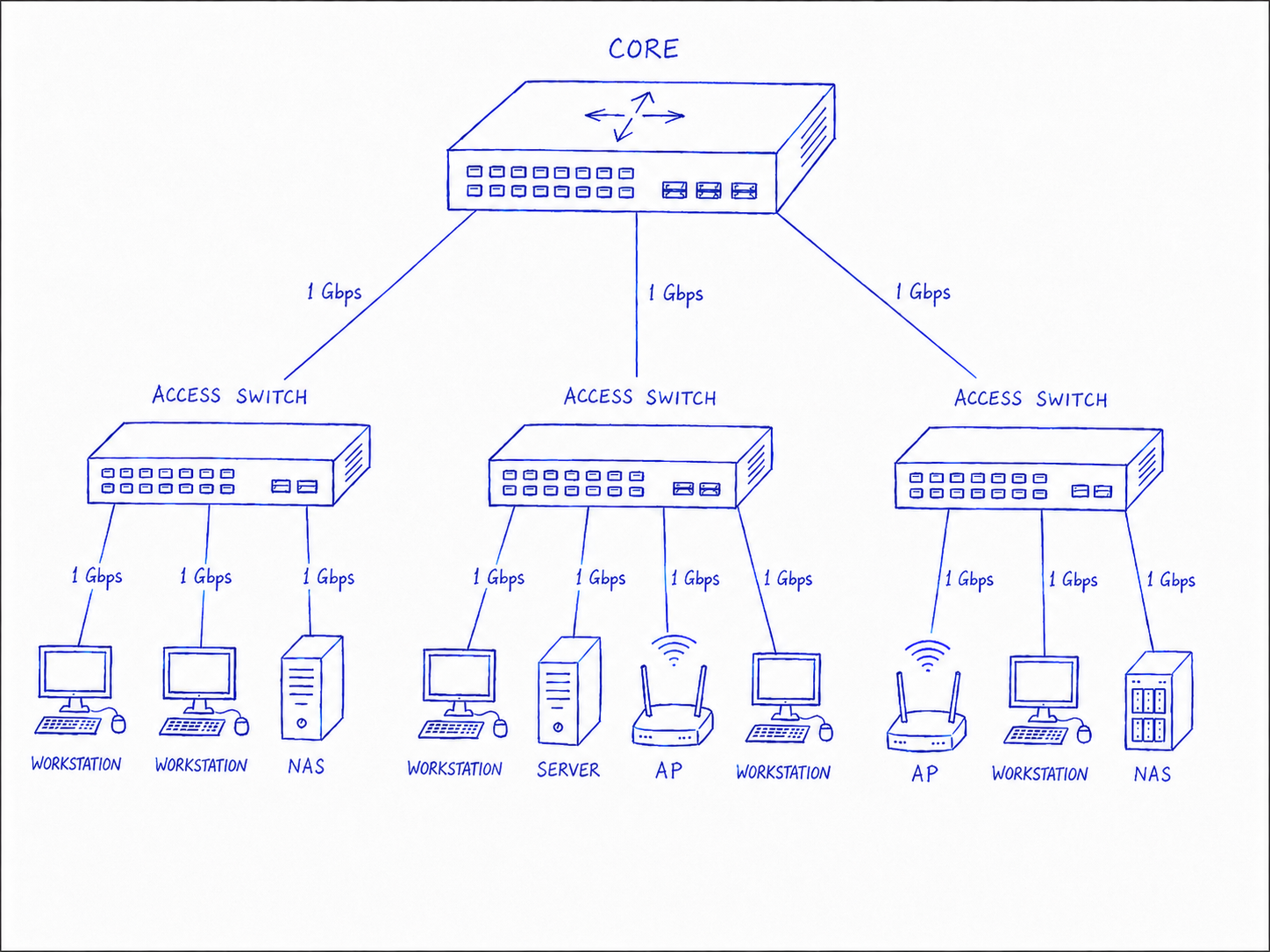
Before discussing the specific device, I suggest we recall how a simple office network with a legacy gigabit topology is usually organised. At the lowest level are workstations, NAS devices, supporting servers, and wireless access points. Most of them are equipped with 1Gbps ports and are connected to upstream access switches. Those switches often use the same 1Gbps uplinks and are connected to the network core:
The Gigabit Bottleneck
The design is inexpensive to implement, which is why it can still easily be found today despite its many obvious drawbacks and bottlenecks. For most workstations, whose traffic consists of text documents, presentations, web browsing, and email, the available bandwidth is perfectly sufficient. At least until a dozen employees simultaneously start copying more or less large files through the core, which handles all routing.
Imagine that you run a video production company and five editors are trying to download large video files from a NAS server at the same time. A 1Gbps link provides only around 110-115 MB/s. Each person gets roughly 20 MB/s, which is already beyond reasonable for a proper 4K or 8K project. Of course, you could limit the upgrade to replacing the switches with models that support 10G uplinks while retaining gigabit access ports. However, considering that the existing copper structured cable system can most likely handle 2.5G, keeping the old speed simply makes no sense.
Wireless networks demonstrate this especially well. Modern Wi-Fi 7 access points can deliver up to 4.7Gbps over the air. Connecting such a device to a gigabit port simply makes no sense, as even a few fast clients can easily saturate an entire 2.5G link. Multigig switches, such as the subject of today's article, are precisely the solution.
What Kind of Switch Is It
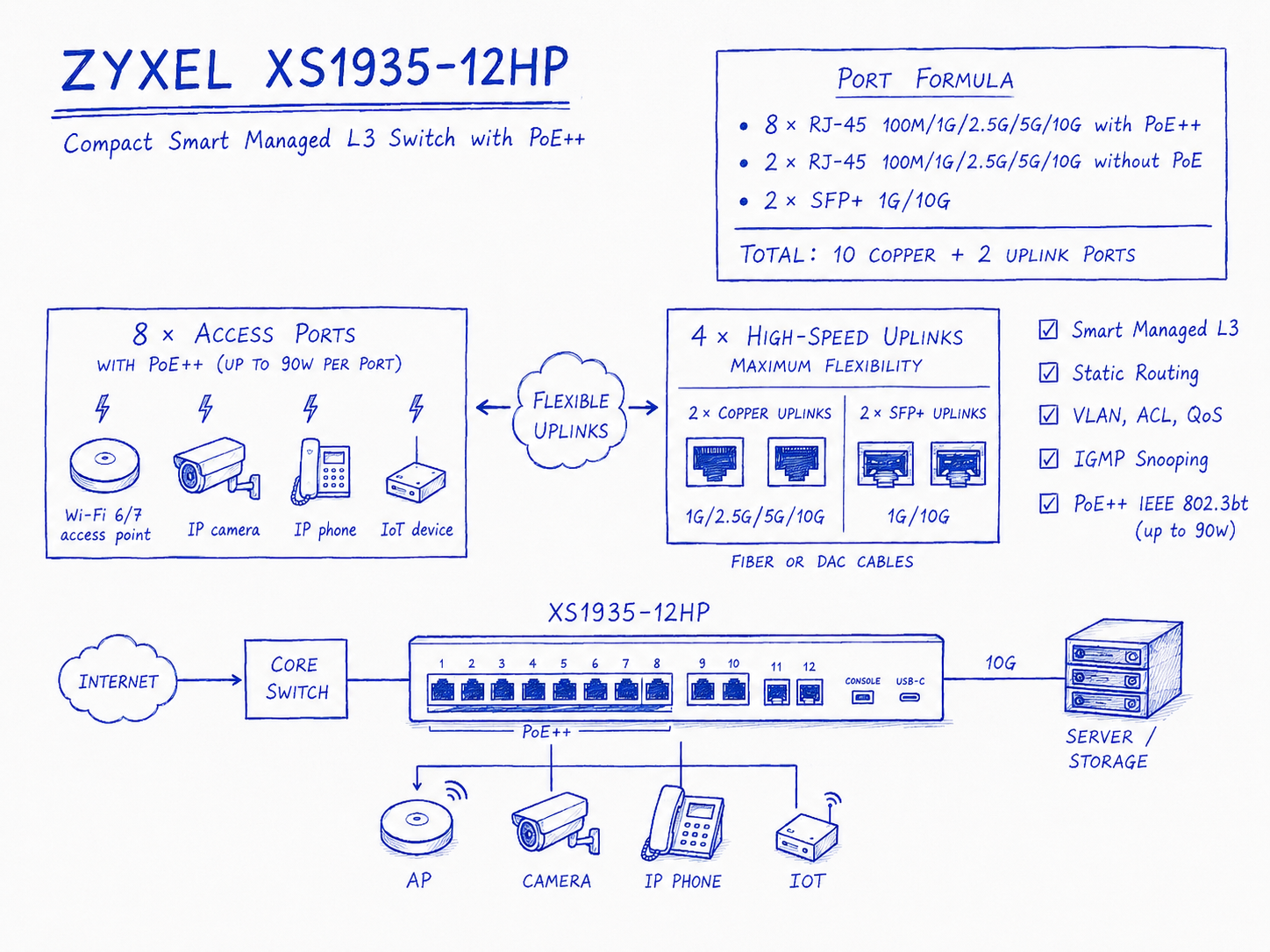
The Zyxel XS1935-12HP is a compact Smart Managed Layer 3 switch with PoE++. Its port configuration may initially seem somewhat confusing:
- 8 × RJ-45 100M/1G/2.5G/5G/10G with PoE++
- 2 × RJ-45 100M/1G/2.5G/5G/10G without PoE
- 2 × SFP+ 1G/10G
In total, there are ten copper ports and two universal interfaces that can be used for fibre optics or DAC cables. The logic is that you get eight access ports and four highly versatile uplinks. However, this division is only nominal, as the same ports can also operate as regular interfaces.
PoE++: 90 W per Port, 400 W of Total Budget
Let us take a closer look at PoE++ support. Zyxel states that each of the eight ports can deliver up to 90W. This is enough not only for ordinary devices such as wireless access points, but also for powerful PTZ cameras, digital signage panels, and video conferencing systems. However, there are two points to keep in mind: the quality of the twisted-pair cable and the total PoE budget.
The switch can indeed provide 90W at its output, but some energy is always lost in the cable. Therefore, if you have a 10 Gbps connection combined with a power-hungry device, this issue requires particular attention. To get the most out of such a configuration, you will need a high-quality Cat 6A or Cat 7 cable, with the latter being preferable solely from the standpoint of shielding.
It is also worth remembering the arithmetic of PoE. Although the maximum power class is available on each of the eight ports, the switch's total available PoE budget is only 400W, rather than the 720W one might expect. Looking at its predecessor, the XS1930-12HP, the maximum was 60W per port and 375W in total. The increase to 90W per port is not a revolution, but it makes a fundamental difference for IEEE 802.3bt PoE++ (Type 4) equipment.
Nevertheless, the switch includes several tools that make it possible to manage the limited PoE budget efficiently. The most useful of these is LLDP-MED, which allows connected devices to negotiate power allocation with the switch based not on the device's formal class, but on its actual power consumption. This makes it possible to account for real operating conditions and plan power distribution more accurately.
Management and Layer 3 Capabilities
The XS1935-12HP continues the dual-management concept. On the one hand, it can operate entirely locally without requiring any additional steps such as mandatory device registration. The web interface remains the main configuration tool, while a console connection is provided for debugging.
No More Hunting for a Console Cable
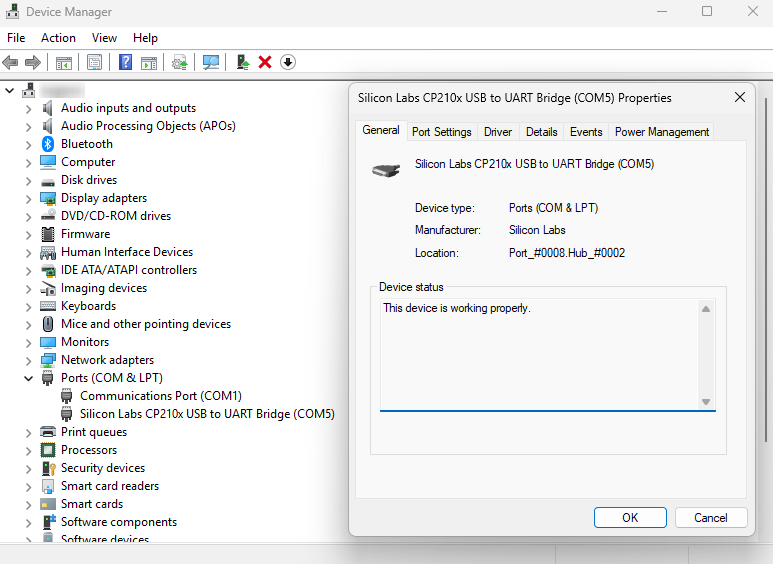
The developers have also made sure that the system administrator does not have to search for a special console cable and connect it separately to a USB-to-COM adapter. Instead, you simply take any USB-C cable and connect it directly to the switch.
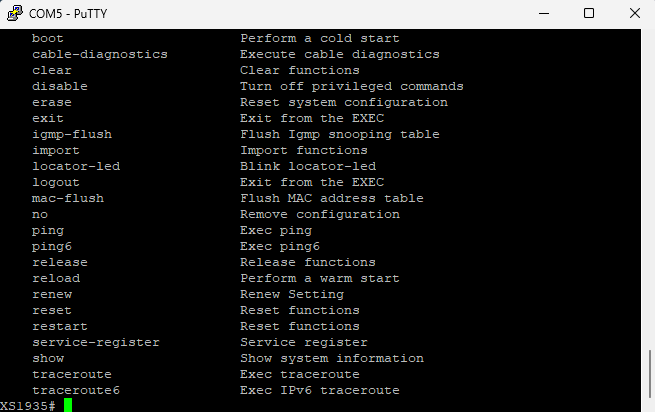
115200 Baud, Any Terminal Emulator
After installing the appropriate drivers from the official website, a COM port operating at 115200 baud becomes available in the system and can be used with any terminal emulator, such as PuTTY.
A Cloud Alternative: Zyxel Nebula
An alternative to local management is the Zyxel Nebula cloud platform. It brings switches, firewalls, gateways, and access points together so that a network administrator can easily manage them remotely without having to set up a dedicated secure channel or expose the web interface to the internet. Instead, the administrator gets a unified dashboard that can configure all equipment, even when it is physically located at remote sites.
The main advantage here is that Zyxel does not impose any artificial restrictions on local operation and does not create conditions in which the customer is forced to become part of an ecosystem chosen for them. Want complete privacy and full control? Simply forget that the device has a cloud connection feature and use it as an ordinary switch.
Need to configure a large number of devices quickly and manage them all from a single point? No problem. It only takes a couple of minutes to install the application and create an account. Even if the cloud service completely stops working at some point, the network will continue to function, and the devices themselves can be reconfigured for local operation at any time. There will be no need to replace the hardware.
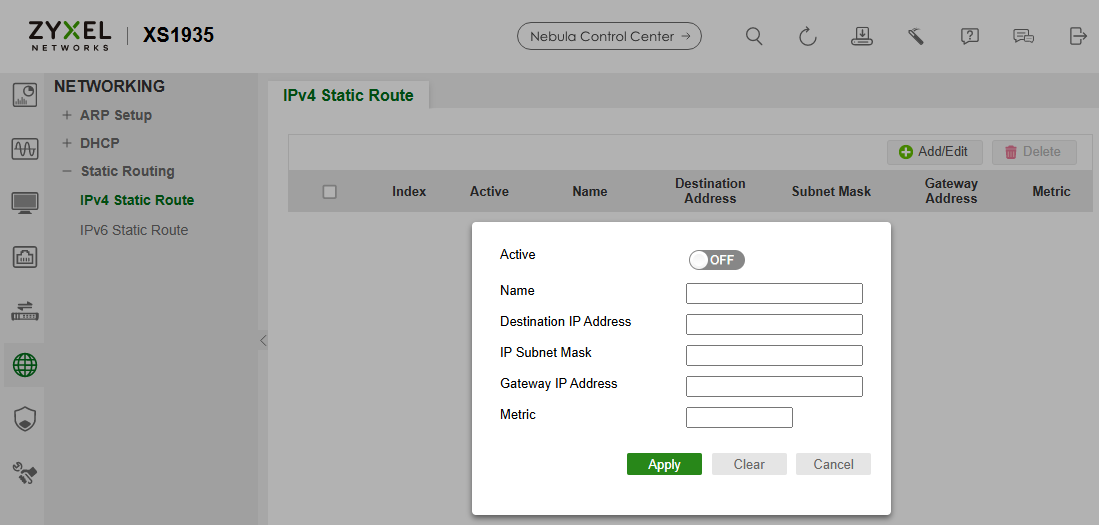
Now a few words about Layer 3. It is important to understand that this is not a full-featured router or a core switch capable of working with dynamic routing protocols such as BGP and OSPF. Its Layer 3 capabilities are limited to static routing, with up to 32 routes between VLANs, support for up to 32 interfaces for IPv4 and IPv6, and up to 512 Layer 3 entries in the routing table.
This kind of Lite Layer 3 functionality is needed to offload part of the inter-segment traffic from the external gateway. For example, suppose you have a NAS and a video surveillance system. Instead of routing all traffic through the firewall and the core, you can configure static routing within the trusted segment, and data exchange will take place through the switch itself. Therefore, even a modest number of routes can significantly reduce the load on the existing network.
What Is Inside?
Despite its compact size, this switch is primarily designed for installation in a standard 19-inch rack or telecommunications cabinet. The presence of PoE and high-speed ports requires effective cooling, which is provided by three brushless fans. Two remove heat from the power section, while the third creates airflow across the switching chips and transceiver cages.

An Open-Frame Power Supply from LEI
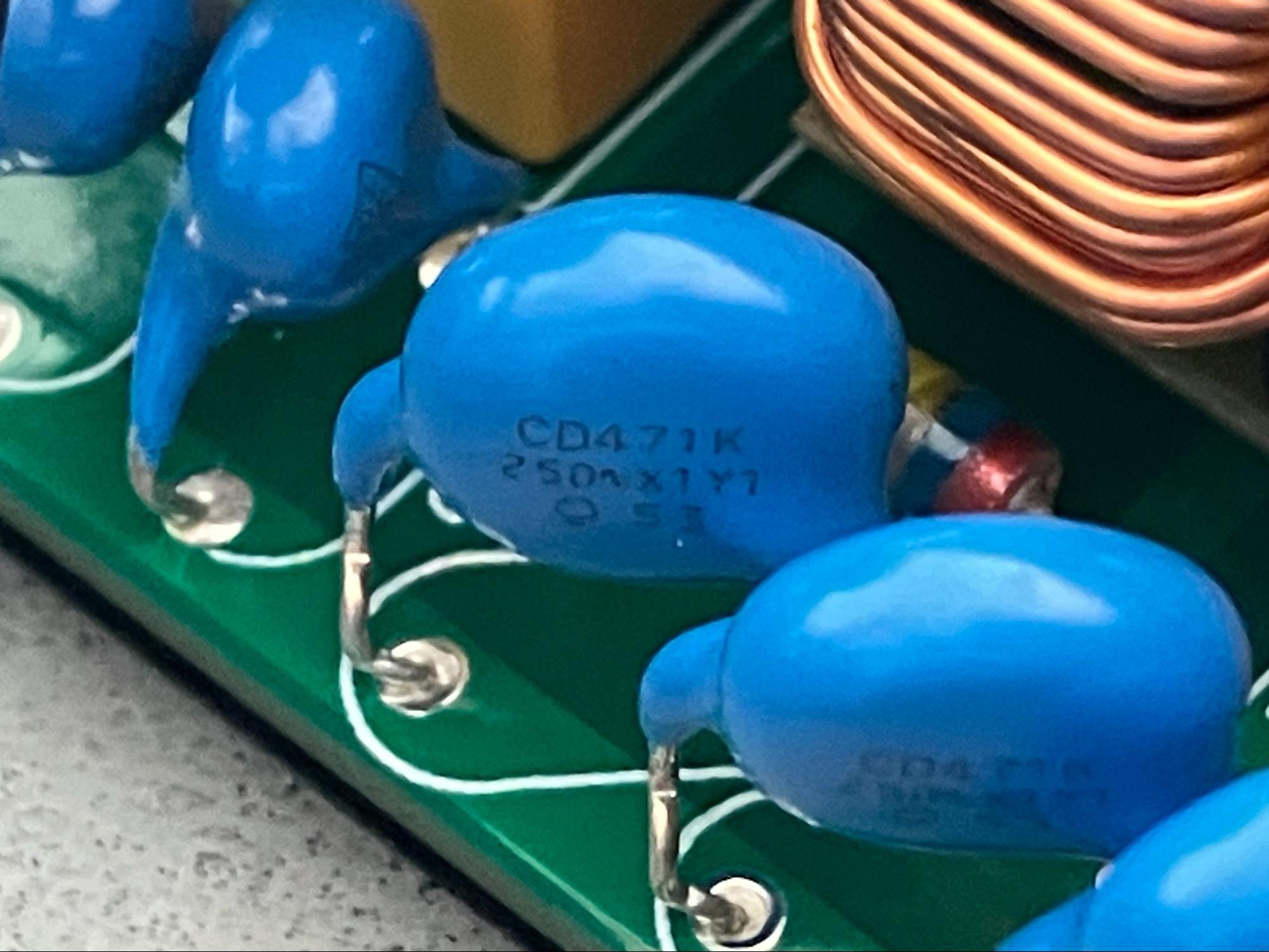
The power supply is implemented as an open-frame module manufactured by the Taiwanese company LEI. It accepts an input of 100-240V at 50-60Hz and 2.2A. There is also a row of blue ceramic disk capacitors marked CD471K and a pair of common-mode chokes wound on toroidal cores. In other words, everything required for effective interference suppression is present, without cutting corners on components.
The output, however, is dual:
- 12V DC / 5A - powers the switch itself, including standby circuits, logic, fans, and supporting components.
- 54.5V DC / 7.4A - provides the same 400W intended for PoE.
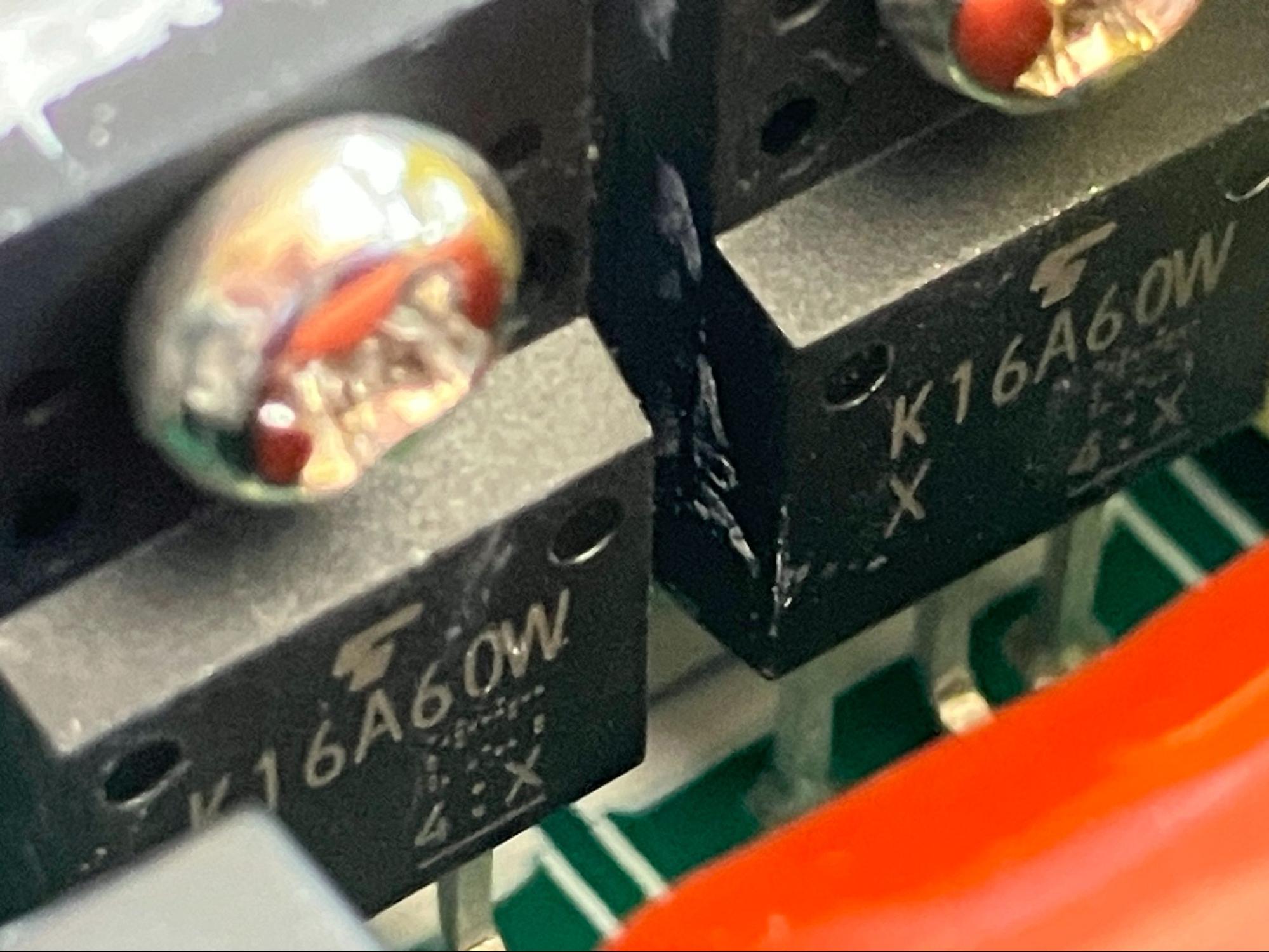
Toshiba TK16A60W Power Switches
Toshiba TK16A60W transistors are used as the power switches. There are powerful 600V, 16A N-channel MOSFETs.
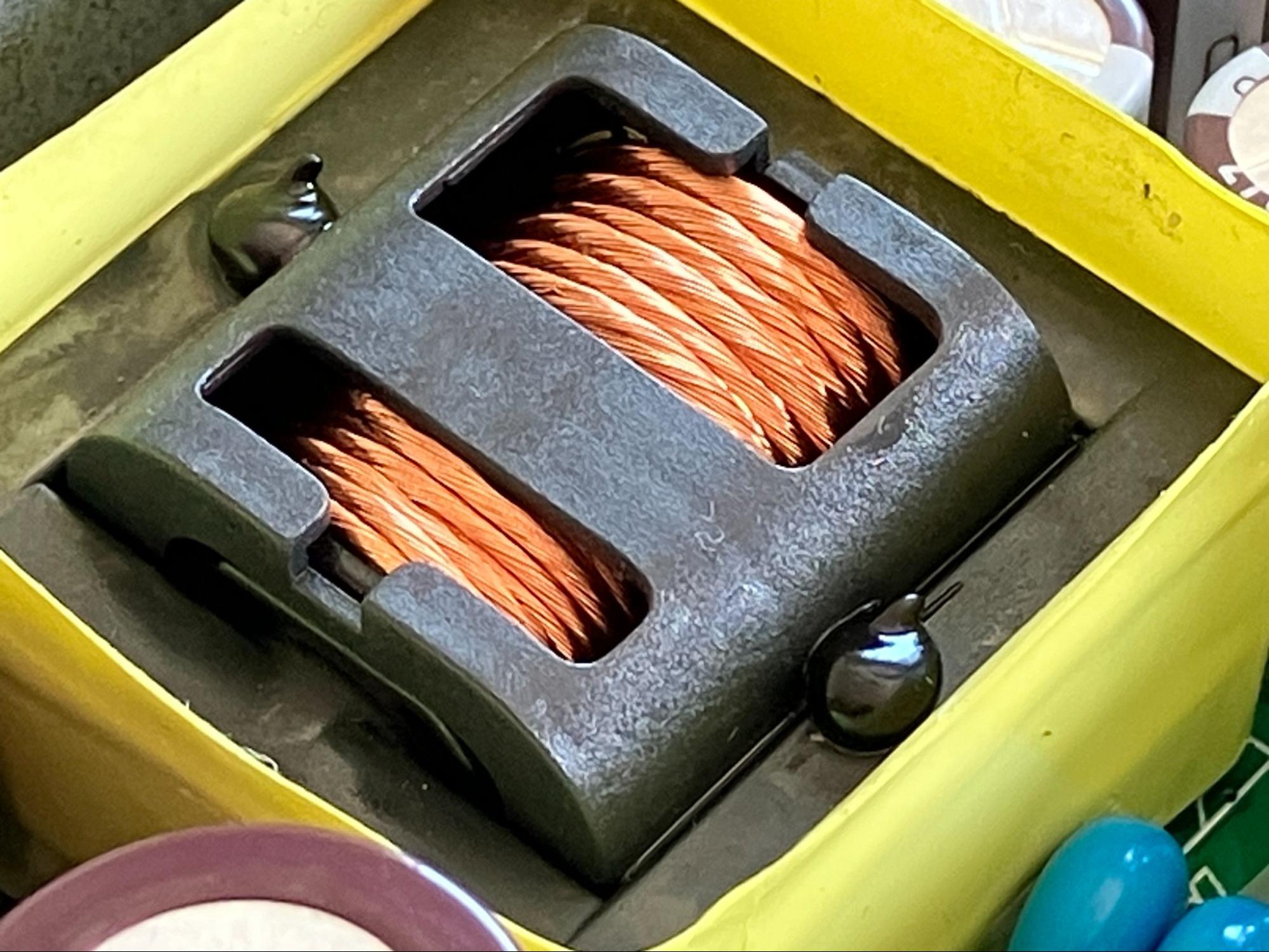
Litz Wire on the Main Transformer
Another interesting detail is that the main transformer is wound not with a single conductor, but with a twisted bundle of multiple insulated strands, known as Litz wire, where each strand is insulated from the others. This is done to mitigate the skin effect at high frequencies.
The conclusion regarding the power section is straightforward: there is nothing exotic here, but there has also been no cost-cutting on decent components. It contains exactly what you would expect to see after removing the cover. It is a sensible choice for a device designed to operate in a server rack for years.
Galvanic Isolation and ESD Protection
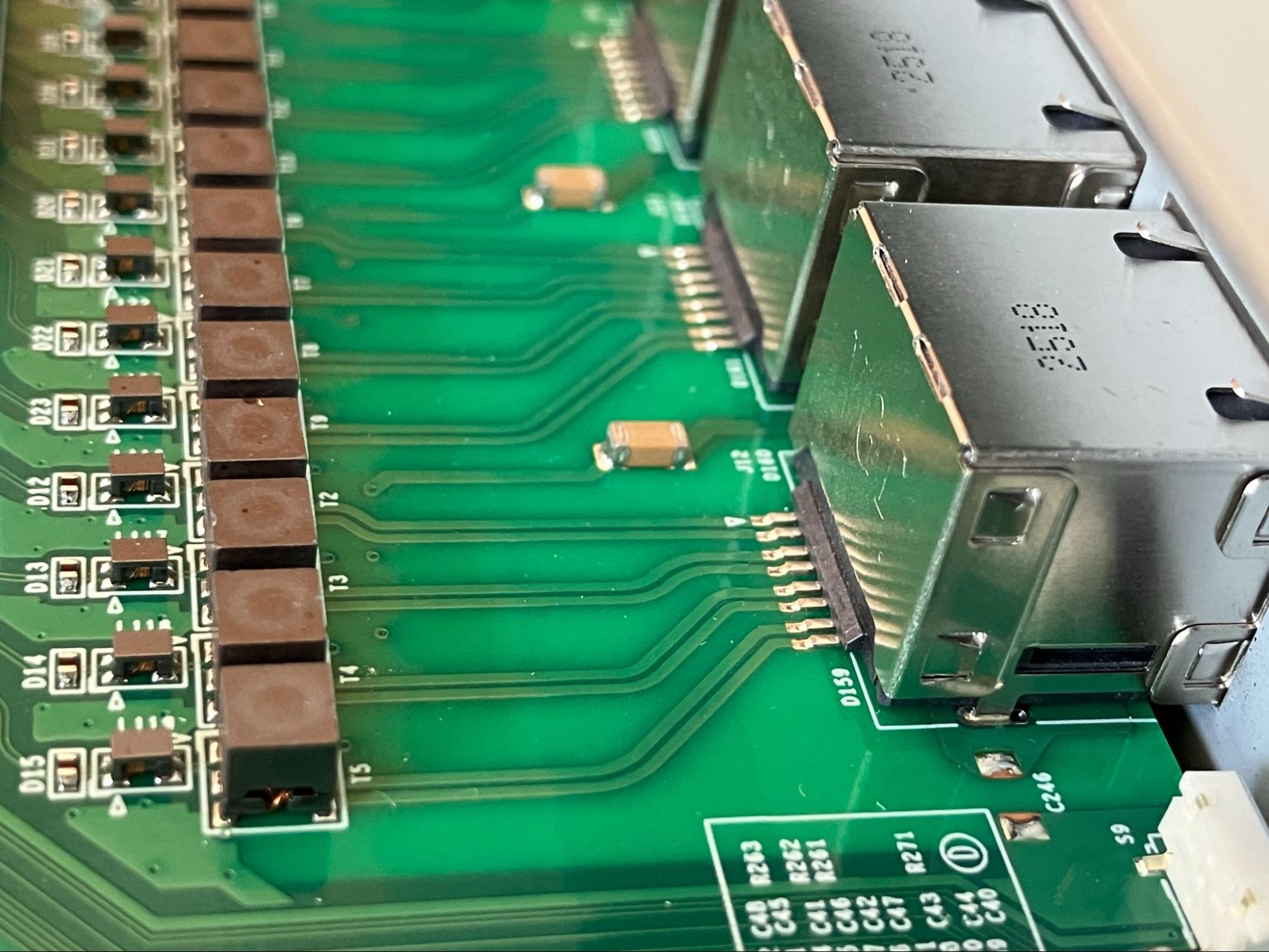
Now let us take a look at the rest of the hardware. Along the edge of the board, there is a row of components. These are integrated Ethernet transformers marked T*, which provide galvanic isolation for the twisted-pair connections, as well as impedance matching and TVS/ESD protection assemblies. Considering that these are PoE ports and that cables may come in from outside the building, the protection here is not merely decorative.
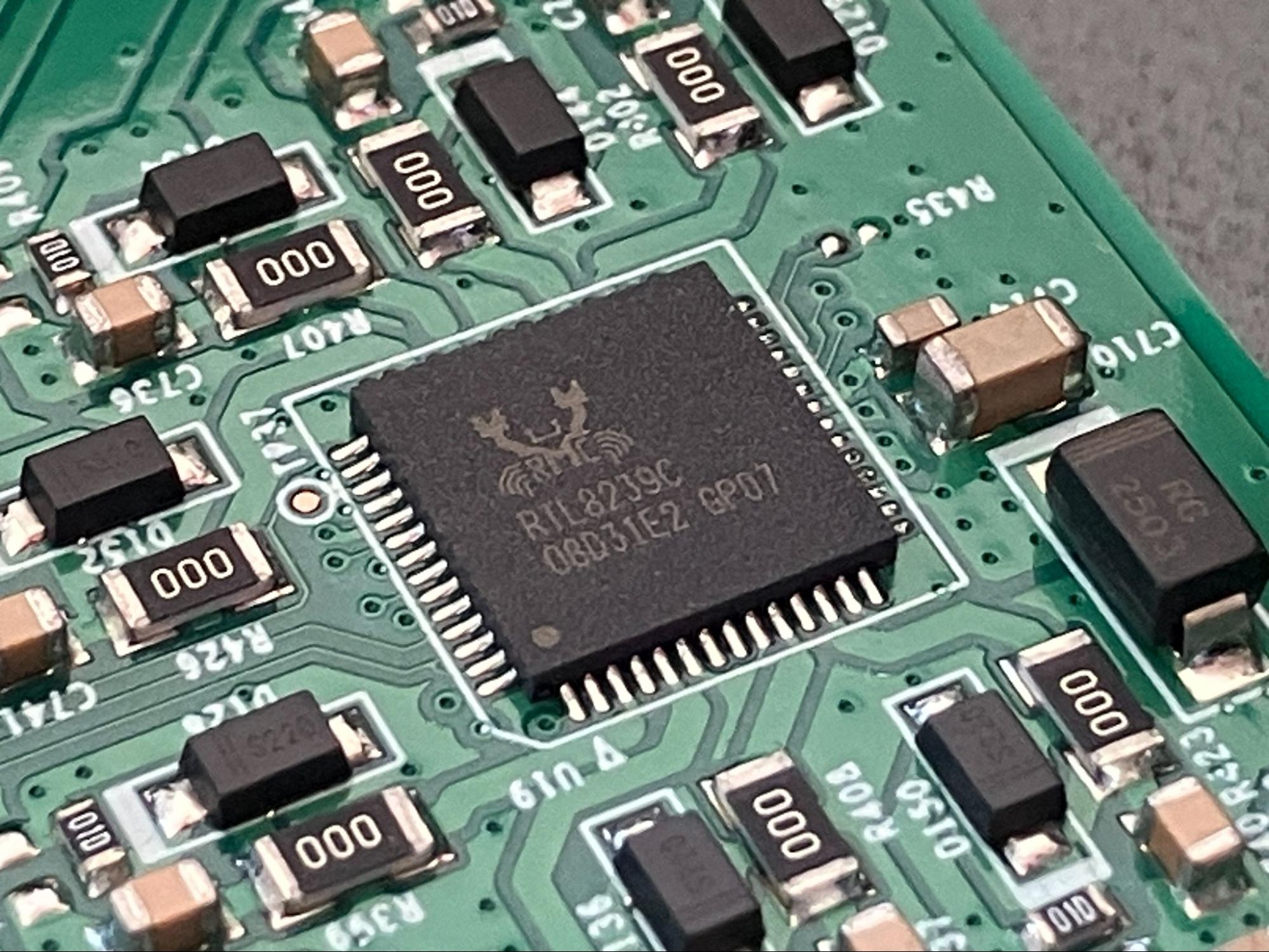
Realtek RTL8239C PSE Controllers
Realtek RTL8239C chips are used as PSE controllers. They are responsible for distributing PoE power, as well as monitoring current levels and the power classes of connected devices.
The ASIC Stays Hidden, but the RAM Doesn't
Unfortunately, it is not possible to inspect the main switching ASIC, as its heatsink is firmly attached with a thermal compound. However, a Micron DRAM chip can be seen beside it.
This allows us to draw a clear conclusion: the switch uses a high-performance combination of an ASIC and an external RAM chip. The technical specifications of this combination are quite impressive. The total switching capacity is 240Gbps, which means line-rate operation across all ports.
Conclusion
Gigabit Ethernet has proven to be an exceptionally resilient standard. It has survived several generations of Wi-Fi, the widespread adoption of cloud services, and the emergence of local neural networks. It is still sufficient for an ordinary workstation, but only until large amounts of data need to be transferred. It is time to admit that it should give way to more modern multigig networks.
Zyxel is not trying to move every user to 10 Gbps immediately. In the XS1935-12HP, the engineers made every port as versatile as possible, capable of operating at anything from 100Mbps to 10Gbps, including all standard intermediate speeds. This was done deliberately so that older devices can continue working as before, while file servers, workstations, and wireless access points can gradually be upgraded to full 10GBASE-T.
Of course, the device is rather specialized. If you have an office with a dozen employees whose heaviest traffic consists of YouTube videos, this switch will undoubtedly be excessive. It should not be installed next to workstations either, as the fan noise will be audible. However, as a compact access switch for a small company's server room or a video content studio, it represents a convincing upgrade that can help the network transition to multigigabit speeds while simultaneously reducing the number of separate power adapters required by the installed equipment.
The main obstacle to a complete transition to 10Gbps is not even the cost of the switch itself. Network adapters and the structured cabling system will also need to be replaced if the investment is to pay off and the network is to deliver that speed in practice. However, this is no longer an experimental technology that exists exclusively under the controlled conditions of a research laboratory. It is already entirely practical, and the XS1935-12HP clearly demonstrates what such a transition will look like.